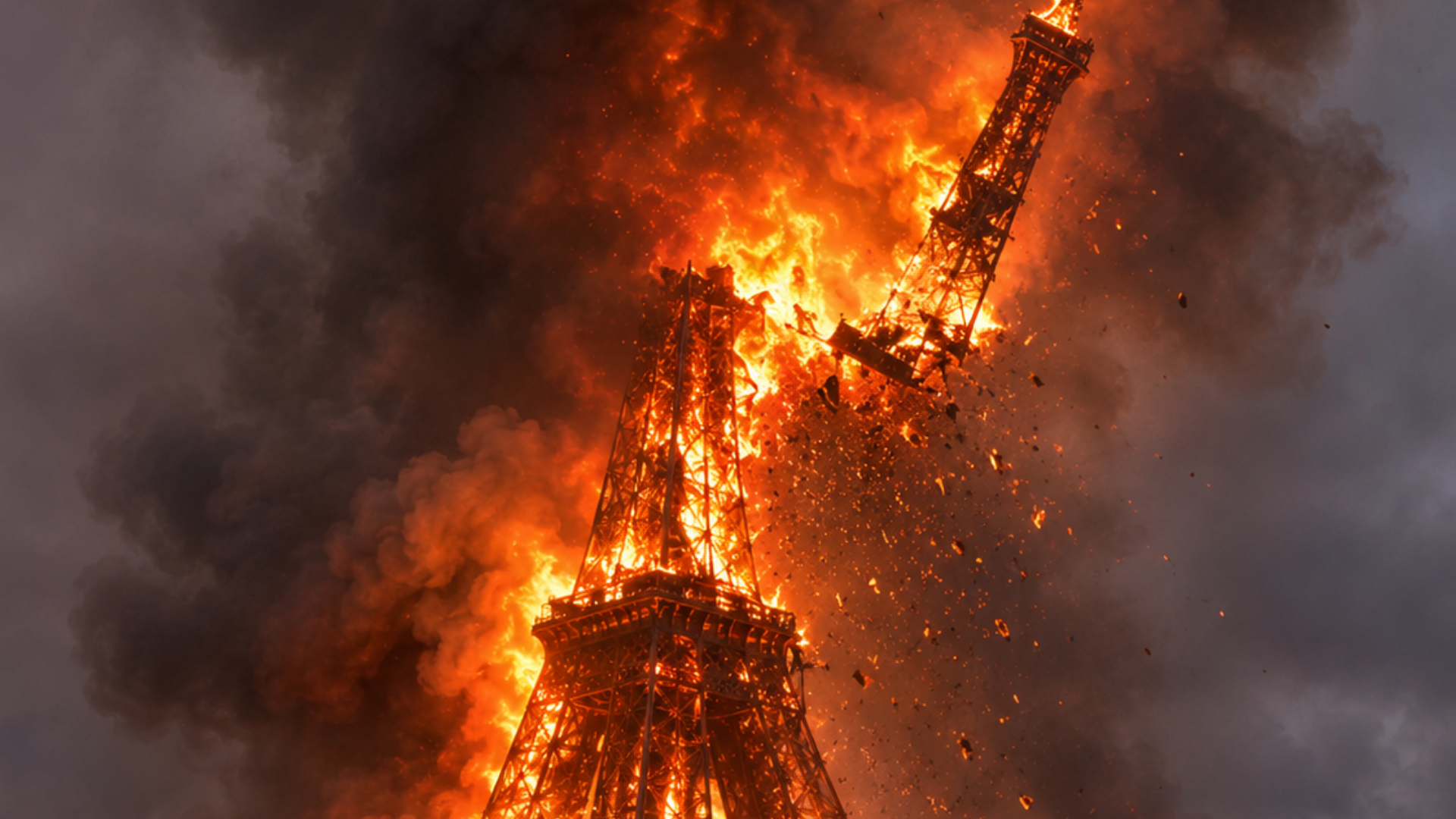
AI Generated
Well, at least it feels like that!
I’m spending three months in Paris and the mood across France is impossible to ignore.
If they can burn down a historic city hall in Limoges, France, inaugurated in 1883, with the dramatic collapse of its 43-meter-high bell tower, then what was to say that the Eiffel Tower isn’t next?
Translated into French:
La tour Eiffel est en train de brûler. — Enfin, c’est du moins l’impression que ça donne ! S’ils sont capables de réduire en cendres un hôtel de ville historique à Limoges, en France — inauguré en 1883 et dont le clocher de 43 mètres de haut s’est spectaculairement effondré —, alors qu’est-ce qui empêche la tour Eiffel d’être la prochaine sur la liste ?
12th September 2026:
I had been running my business ARTE Leadership from Paris.
I had expected to experience all things French: from le metro/bus/RER, to sidewalk cafés, to visiting galleries and museums, and to walking through beautiful ‘jardins’ de Paris. My expectation was to be basking in ‘la joie de vivre’ - ‘the joy of living’ - alongside collaborating with my clients near and far (virtually).
What I didn’t expect at all was to find myself in what still feels, today on November 11th, like a real live French Revolution or as the French describe this student movement - La révolte des lycéens.
I knew that I would be designing and implementing strategy plans with my clients, but I had no idea that I would be in the middle of strategic (mis)calculations on a country-wide level.
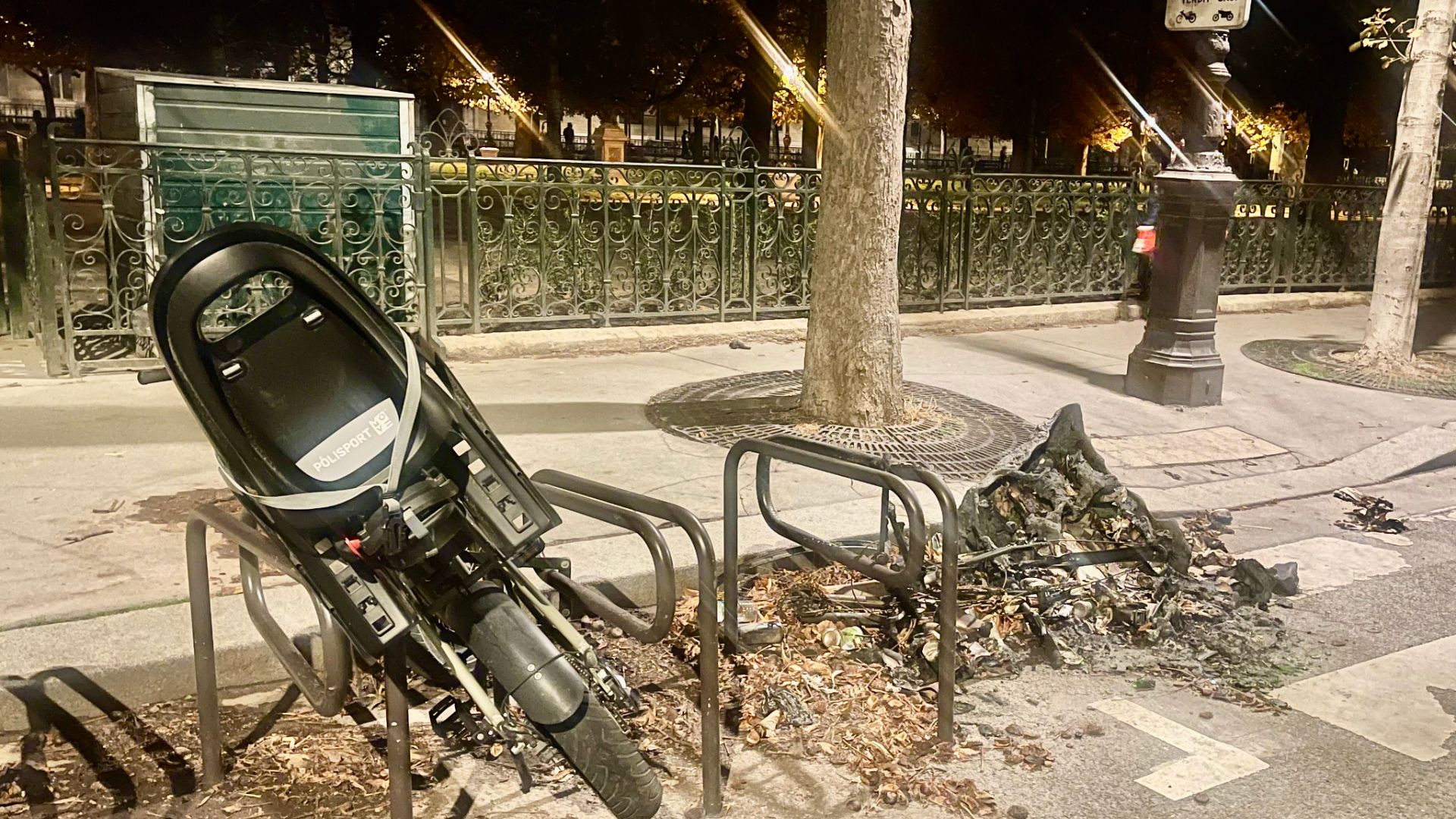
I was forced to be a witness to blue and red tear gas, burning rubbish bins, burning bikes, loud vocal proclamations, police behind glass shields — and very determined student protests in full force.
I saw it all. And I wasn’t looking for it, but even if you were not part of this, it was, and still is, very much a part of the current French fabric. French TV was bombarded by opinions and debates about the protests 24/7. As I walked onto my balcony, I could hear protests by students in front of their schools. And when I went out in search of a ‘baguette’ or ‘pain au raisin’ - I realised (from the extensive police presence) that these simple actions came with risks. This reminded me that as I help my clients develop and build out their strategic plans, it is always important to critically consider the environment and context of those plans. Things that could be taken for granted in one country should not be assumed to hold the same risks in another country, because not only are they different in nature, but they came with differing socio- and geopolitical risks.
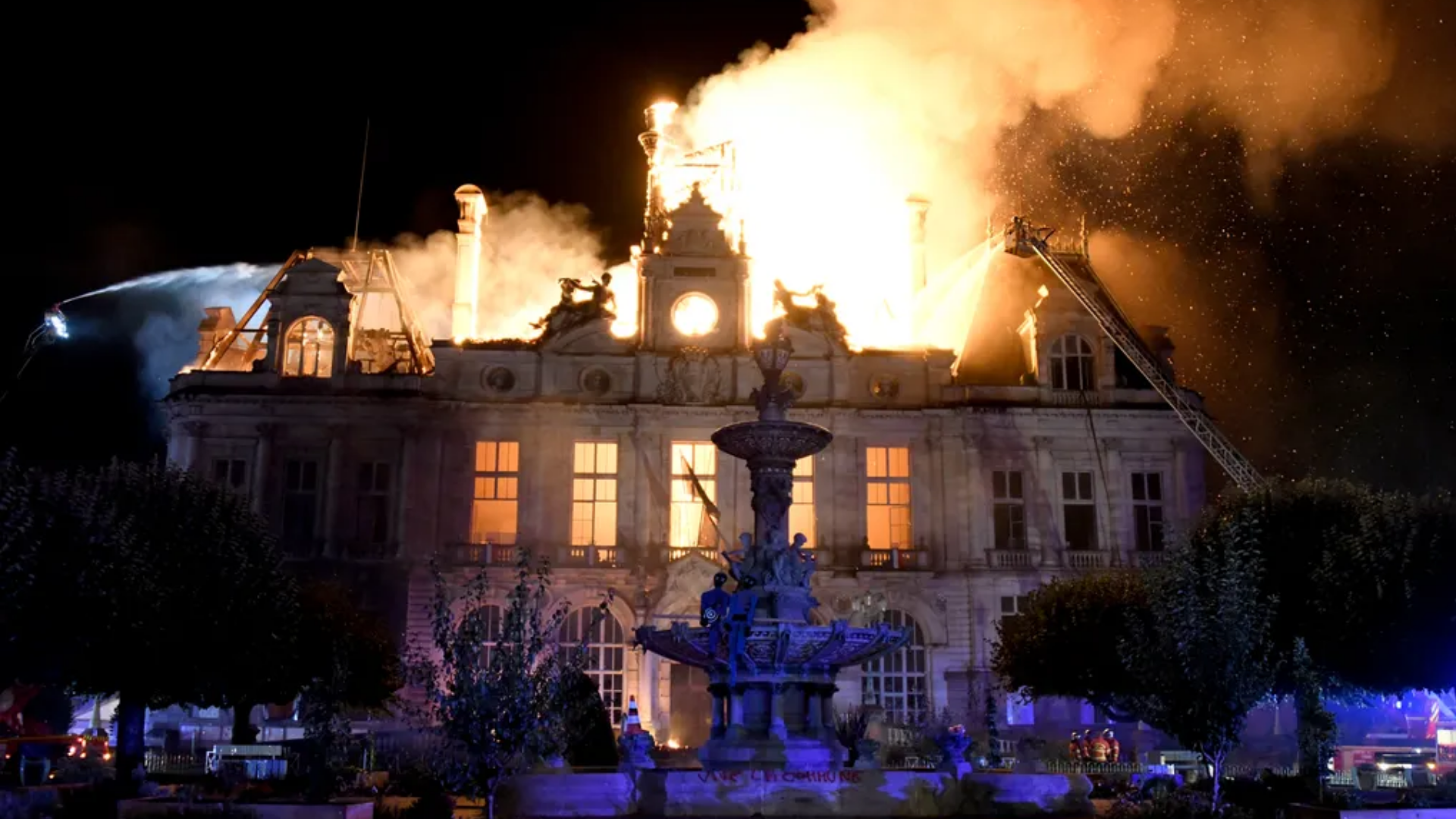
Burning of City Hall in Limoges
28th September 2026:
What started off as a student protest from les banlieues (outskirts) of Paris became a movement that pervaded all of Paris, and indeed France. My clients outside of France asked me - “So, what is this really all about?”
It was about students communicating that they were fed up with the chronic disinvestment that had resulted in really poor student conditions that they had been experiencing through teacher shortages, rodent infestation in schools, a lack of proper infrastructure, plus more - all of which affected the level of their academia.
Each morning, I could hear students dragging rubbish bins and anything they could get hold of to blockade the entrance of their schools. The so-called bourgeois students and well-to-do high schools joined in to show support, including teachers and school staff. Next to them there was always a huge and menacing police presence.
Did it feel safe to me? - Absolutely not.
Did I feel safe? Yes, in a weird way as I felt I was an observer and wanted to see what strategy the French powers that be - would adopt.
From my balcony, I could hear the voices of the students getting louder and louder each day and simultaneously I could clearly see a beautiful view of the Eiffel Tower. The Eiffel Tower was still standing. Each morning, as I further grounded myself and started my day, in the background I heard it getting louder - students chanting, shouting, hitting rubbish bins, and speaking their truth against injustices.
And they would not be silenced.
The concoction of frustrations was brewing, bubbling and about to burst forth.
I wondered what strategy the French powers were designing behind the scenes to address this. I assumed that they were working overtime as they came up with a ‘communiqué’ and plan to address the students, teachers, heads of school and key stakeholders in this obviously turbulent time.
13th October 2026:
As I went about my daily life, I continued to hear students protesting outside of their schools. The atmosphere was really palpable that something else was about to ERUPT. In the faces and voices of students, some teachers, and other people who were part of the demonstrations, I saw and felt a heightened level of frustration, growing anger, and a real determination for changes and answers. I witnessed resolute students with very articulate wants, against police with a high level of inflexibility and physical armour to stop the students in their tracks. I wondered what strategy the police had been given to follow?
As I turned on the French news and listened to endless debates, on a multitude of French channels, what I found interesting was that there was a lot of coverage of growing unrest - but very few answers from the French leadership as to how they were going to address this situation. It does not look like French government culture was eating strategy for breakfast, or even bothering to turn up to the table (Culture eats strategy for breakfast - often attributed to Peter Drucker). Was it possible that they thought eating a croissant and having a cup of strong coffee was enough to will a strategy?
What started off as students asking for some basic human and scholarly rights escalated into ‘un cauchemar’ - a nightmare - and a free-for-all for everyone, including those who had ‘legitimate’ beef about issues such as increasing living costs and unrealistically low minimum wages. Unfortunately, ‘everyone’ also encompassed unsavoury opportunists and delinquents who took the opportunity to add more fuel to the fire, metaphorically and physically.
So what did ‘leadership’ choose to do?
From my vantage point it looked as if leadership was making an assumption that somehow this noise and frustration would die down; that these protests would somehow dissolve by themselves and that this was really no big issue to focus on. That somehow the students would run out of steam.
Leadership, therefore, had done nothing, and that in itself was a strategy.
“We - (leadership) do nothing, we say nothing, and we shall see how things pan out and evolve by themselves”.
Was this the correct strategy?
Had leadership made the correct assumption?
How would this strategy cost leadership, and the country, quantitatively and qualitatively?
October 16th 2026:
Something different was in the air
It was a Friday, and that morning, as I went about my daily travels, there was a very palpable feeling that things were going to explode. Next to the ‘Jardin du Luxembourg’, I was certain that I was in a super safe ‘quartier’ even though I was surrounded by demonstrations in every direction. As I tried to go to the ‘metro’, I was hit by blue and red tear gas which affected my eyes and nose instantly. The police were armed with huge glass shields and this zone looked like the making of a huge stand-off and more. Determined students looking for answers were protesting in every direction. I decided to do a U-turn to ensure my safety.
Leadership continued to stay behind their walls and from the outside, or more specifically, my outside, it looked as if they continued to convince themselves that this was just normal French frustration by the students. This was a very interesting leadership strategy.
(I use the word interesting to express surprise, scepticism, or a way of reacting to something strange without directly calling it bad or weird).
October 17th and 18th 2026
When I woke up on the 17th, I decided to go to a meeting by ‘Pont de ’Alma’ - Alma bridge - close to the Eiffel Tower. My journey there was fine, though I did notice many students on the train with pieces of cardboard on which were written many things, including:
“On vise le bac, la BAC nous vise” -
We are aiming for our baccalauréat but the police - Brigade Anti-Criminalité - are aiming for us.
“Vous pouvez nous enlever nos téléphones mais pas notre parole”
You can take away our phones but not what we have to say.
“La vie en colère”
An angry life. Normally one would refer to a scholarly life for students - la vie scolaire and so ‘colère’, which rhymes with ‘scolaire’, had been swapped out.
“Oeil pour oeil, dent pour dent, main pour main—la police va trop loin”
An eye for an eye, a tooth for a tooth and a hand for a hand - the police are going too far.
In hindsight, with all the growing unrest going on, the tumultuous debates on TV, and the previous day’s run ins with protestors and police - I should have made a U-turn and missed the meeting. But after 6 weeks of acclimating myself to this situation, that day felt like the current norm for me. Another day in the life of a French revolution as an observer. Perhaps it was this current norm that leadership was feeding off of and so they had put strategy in the parking lot as a side issue.
When I finished at around 6pm, I planned to take the same route home, which normally took me 15 minutes. However, I was met by a huge demonstration on ‘Pont d’Alma’. Tear gas was everywhere, police were everywhere, and I could smell burnt rubber in the air - which meant rubbish bins and/or bikes were being burnt and/or even more. It looked like there were thousands of people in every direction and in complete disarray.
I wondered - were these protestors on their way to burn down the Eiffel Tower?
I quickly ran down a side road (and I was not a runner) to ‘Ecole Militaire’ where I knew I could jump onto a bus. Luckily things were quieter there. As I got onto the bus I made a mental note to stay indoors the rest of the weekend as things felt out of control. Half way along the bus trip we hit another large demonstration with a huge police presence. 1000’s of students were walking down a street and the police were in full force firmly planted across several roads not allowing the students to pass. This visible friction was very difficult to witness and I was now on high alert and panicked. Again the smell of burning rubber and high pitched chanting filled the air. This was Paris? Yes this was Paris on a Saturday evening.
The bus driver quickly turned down a side road and told us to get off as he was going back to the bus depot.
Was this scary? - yes!
I really had no idea where I was and my phone ‘conveniently’ had no connectivity so I could not even Google map where I was nor how I was getting home. My 20 minute journey turned into 3 hours, but through the help of strangers, I got home safely.
I turned on the TV because I had now not only witnessed mayhem but it was very clear to me that the boiling point had come. The huge brewing mess of dissatisfied students, disgruntled French people and other groups of individuals all with seemingly unanswered questions made the perfect ingredients for the spill over and explosion of what then happened on October 18th. On that night in Paris and all over France, things got larger and larger - and hotter and hotter - and more risky - and then completely out of hand. The inevitable explosion was compounded by the addition of groups of vandals who took advantage of a precarious situation between students and the police and made it worse by breaking into shops, stealing and looting, and causing complete destruction on another level.
A true nightmare - un véritable cauchemar -
These were not typically students on the rampage. These were opportunists and looters on a mission to destroy and loot France. And they did. Cars were burnt, fire engine trucks were burnt, and even the beautiful 143 year old town hall was burnt down. France was on fire and, from my balcony that night, I thought the Eiffel Tower was next.
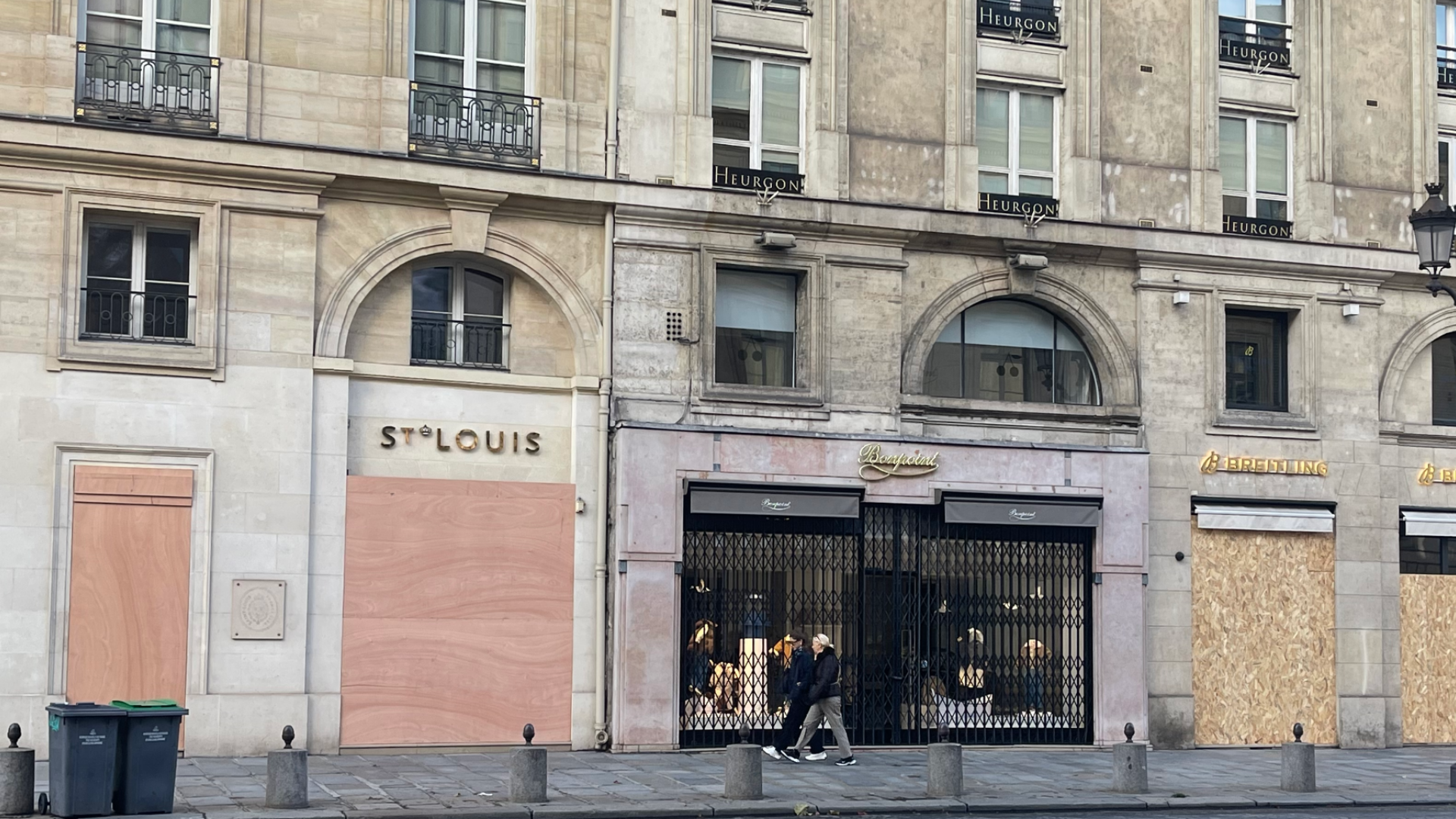
In the next few days, as I walked about Paris, devastation was evident. Pathways were covered with cinders from burnt objects, buses swerved to sidestep large burnt objects in the middle of the road, bikes lay toppled over and burnt, bins were burnt and a country known for all things beautiful was weighed down by this shocking ‘ugliness’. Shops with broken glass and worse completely annihilated and destroyed. Other shops that could afford to, quickly sealed their glass windows with wooden frames.
Messages on the frames were heart breaking -
Tout a été volé - c’est vide. Je vais essayer d’ouvrir dans 3 mois.
“Everything has been stolen from my shop. It is empty. I shall try and be open in 3 months”.
Tout est perdu. Je n’ai rien.
“Everything is gone. I have nothing left.”
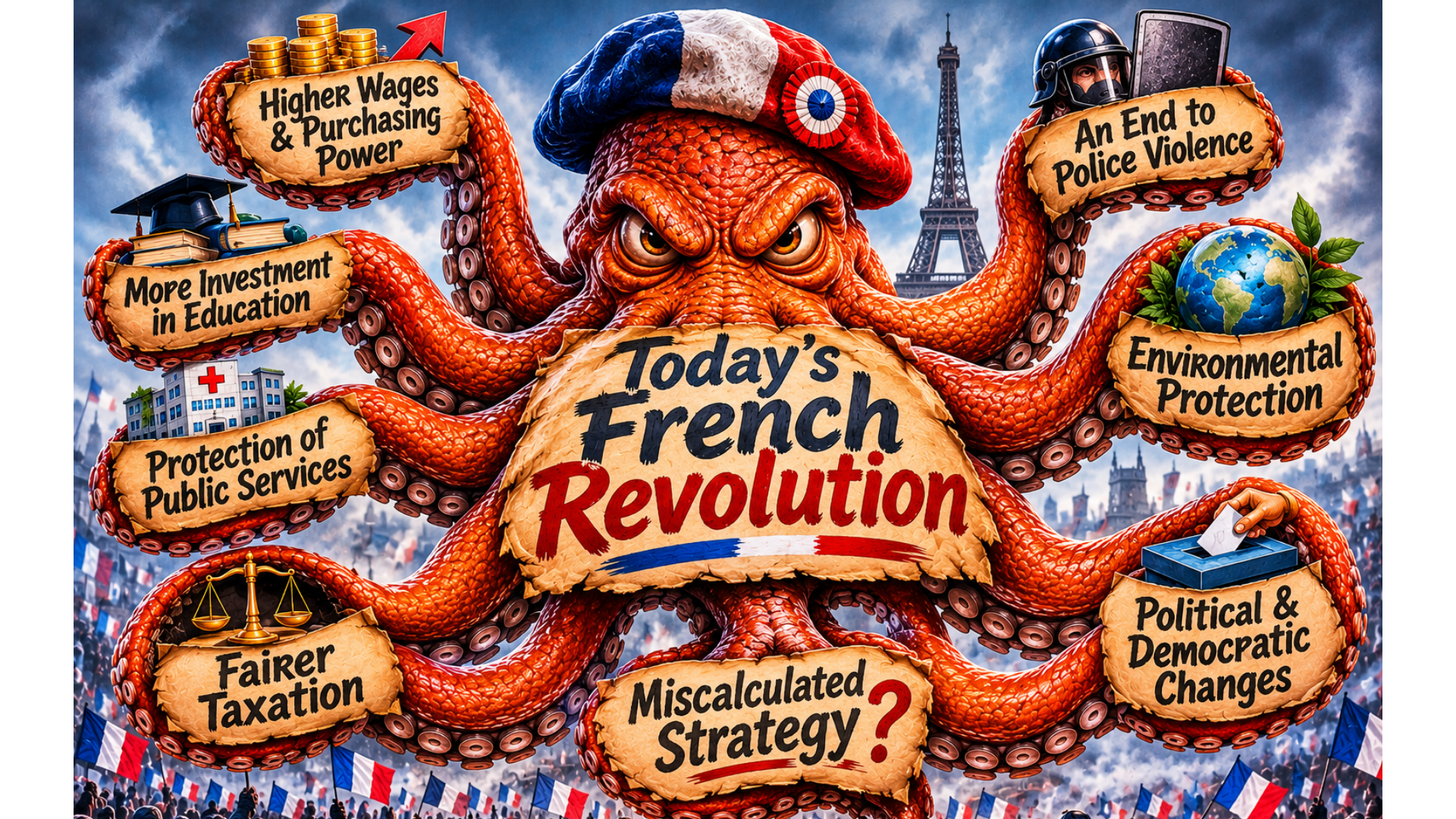
After October 17th, the powers that be had another critical and strategic opportunity to respond to their growing number of stakeholders. Out of the demonstrations grew an octopus with tentacles of frustrations and demands by different groups.
The French President Macron expressed shock, asking: “How could French people do this to France?” - ( destruction/ burning down of/ looting of shops/buildings/).
AI Generated
7th November 2026:
Since October 18th, 3 additional weekend demonstrations took place, and more were set on the French calendar. On November 4th the headlines read:
“Le gouvernement a peur du 5 Novembre” (the government was scared about November 5).
The November 5th demonstrations were large. France’s Interior Ministry said 575,000 people participated in the protests nationwide, while the CGT union, one of the organisers, said 1.6 million had taken part.
From my brown eyes, this thing in France sure looked like a revolution. What started off as a valid student demonstration with specific student demands that had still not been explicitly addressed or mapped out in a short-, medium, long-term strategic plan for the students and the public, had now morphed into a situation where many other stakeholders were leveraging off of this revolution.
11th November 2026:
Now the inside of schools is being destroyed and burnt - Des lycees incendies. With an already strained police force and with a shortage of the police force, groups are calling for police officers to be deployed to protect schools.
The Eiffel tower seems as if it is burning down, albeit metaphorically now, and I am not only watching this space but living in this space.
What is next? I have no idea, but what I do know from many years of experience working with clients in corporate and in business is that:
If there is no strategic direction, businesses shall eventually hit a crisis; and if they do not address challenges in a strategic way they collapse, go bankrupt and/or diminish in size.
Having no strategic plan in place opens the floodgates for chaos and non-accountability, and the value of business decreases.
Without clear and strategic communication as to how leaders are going to resolve issues and move forward, confusion and frustration further reign, and the situation gets even worse before it can get better.
For now the Eiffel Tower is still standing - but just.
If you are smelling any smoke or seeing any flames in your business don’t wait for a revolution.
Let ARTE Leadership assist you to get your strategy aligned to the needs of your vision and that of the greatest needs of your internal and external stakeholders.